The Codex
PP-05 CHROMIUM — THE ONE-SECOND TEXTBOOK
FIVE GENERATIONS, ONE MACHINE, ZERO INK
Classification: Plausibly Engineerable
Scientific Basis: Established (femtosecond laser-polymer interaction, vacuum web transport)
Key Dependencies: Polymer-V / Substrate-X supply chain at production volume, magnetocaloric thermal management at sustained duty cycle, leuco-dye color stability under UV exposure
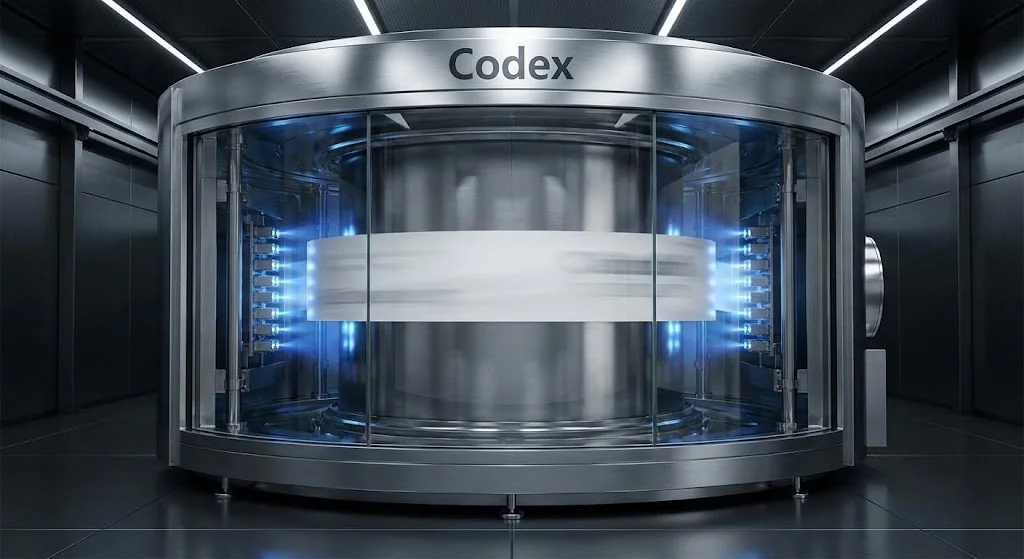
FIG 1.0: PP-05 “CHROMIUM” — SINGLE-BOX FULL-COLOR BOOK FORGE
Five prototype generations retired five fundamental limitations. PP-01 proved sub-second femtosecond ablation on static targets. PP-02 added continuous vacuum web transport and laser scission. PP-03 integrated UV spine fusion and reactive cover hardening. PP-04 — the original Codex — achieved the first complete sub-second imaging pass with full thermal management, but depended on a cryostat consuming four thousand liters of superfluid helium. PP-05 “Chromium” retired the last three constraints: monochrome output, single format, and cryogenic dependency. It is the product.[2]
The Manufacturing Sequence
The spool enters a hard vacuum chamber (10−6 Torr) and accelerates to 40–60 m/s on superconducting magnetic bearings with zero contact friction. No air resistance. No flutter. No heat from boundary layers. A phased photonic write head images the web in a sub-second photonic pass. Black text at 1,200 DPI via femtosecond surface conversion. Full color via the Substrate-X Chroma system.
Vector lasers slice the imaged web with no mechanical blade. Sheets transfer to a capture chamber where electrostatic retention and fiducial alignment assemble the book block. A UV laser strikes the spine, melting and re-solidifying the Polymer-V faces as a single continuous polymer weld — no glue, no outgassing, no curing time.[5]
The first and last sheets receive a high-UV cross-linking dose that converts flexible polymer into rigid structural board (Mode H), while interior pages receive standard cure (Mode P). Same spool. Same material. Software decides the format.
Thermal management is cryogen-free: high-conductivity sink plates for pulse absorption, active liquid cooling for bulk heat rejection, and a magnetocaloric GdSiGe regulation stage. Books exit at 21°C ± 0.5°C.
REQUIRES: Polymer-V / Substrate-X photonic substrates from Polymer Press — the single-spool format requires dual-cure polymer with leuco-dye color layers
REQUIRES: Superconducting magnetic bearings from Highfield Magnetics — zero-contact web transport at 40–60 m/s in hard vacuum
ENABLES: On-demand printing for MK-Oasis (the Foundation) — field-deployable textbook production in humanitarian settings
ENABLES: Photonic substrate manufacturing for Polymer Press — Codex demand drives Polymer-V production scale
Open Unknowns
- Leuco-dye color permanence under prolonged UV exposure and humidity cycling has not been characterized beyond laboratory accelerated aging. Archival longevity is unknown.
- The 1-second full-color hardback target has not been achieved; current cycle time is 5–10 seconds. The gap is in thermal management at sustained duty cycle.
- Polymer-V spine weld long-term fatigue behavior (repeated opening cycles over years) is uncharacterized compared to conventional adhesive binding.